Νέα στοιχεία εντοπίστηκαν σχετικά με την ασφάλεια της μεθόδου ελέγχου εμβρύων εξωσωματικής γονιμοποίησης

Ερευνητές στο Πανεπιστήμιο του Κεντ έχουν εντοπίσει κρίσιμα νέα στοιχεία σχετικά με την ασφάλεια και την αποτελεσματικότητα μιας αμφιλεγόμενης τεχνικής στην θεραπεία της εξωσωματικής γονιμοποίησης – την ονομαζόμενη προεμφυτευτική γενετική ανάλυση για ανευπλοειδίες (PGT-A).

Η PGT-A είναι ο έλεγχος για γενετικές (χρωμοσωμικές) ανωμαλίες σε ανθρώπινα έμβρυα εξωσωματικής γονιμοποίησης με σκοπό τη βελτίωση των ποσοστών επιτυχίας της εξωσωματικής γονιμοποίησης και την προστασία από αποβολές. Ωστόσο, η Αρχή Ανθρώπινης Γονιμοποίησης και Εμβρυολογίας του Ηνωμένου Βασιλείου (HFEA) έθεσε πρόσφατα ένα «κόκκινο φως» όσον αφορά την ασφάλεια και την αποτελεσματικότητά της. Η τρέχουσα μελέτη παρέχει ισχυρές αποδείξεις για τα οφέλη της PGT-A.

Οι ερευνητές χρησιμοποίησαν τα δεδομένα του HFEA για την περίοδο 2016-2018 ώστε να εξετάσουν τη γέννηση και άλλα αποτελέσματα που αναφέρθηκαν, με και χωρίς PGT-A. Πραγματοποιήθηκε στατιστική ανάλυση των διαφορών μεταξύ των κύκλων εξωσωματικής γονιμοποίησης PGT- A και “κανονικών” κύκλων εξωσωματικής γονιμοποίησης, ομαδοποιώντας κατά ηλικία μητέρας, τον κύριο γνωστό παράγοντα κινδύνου για χρωμοσωμικές ανωμαλίες.

Συγκεντρώθηκαν δεδομένα για σχεδόν 2.500 PGT-A, από τους συνολικά πάνω από 190.000 κύκλους εξωσωματικής. Το ποσοστό γεννήσεων ζώντων εμβρύων ανά μεταφερόμενο έμβρυο και ανά κύκλο θεραπείας ήταν σημαντικά υψηλότερο για όλες τις ηλικιακές ομάδες PGT- A έναντι κανονικών ηλικιακών ομάδων εξωσωματικής γονιμοποίησης. Σε ασθενείς ηλικίας άνω των 40 ετών, τα αναφερόμενα ποσοστά γεννήσεων ζώντων ήταν 3-11 φορές μεγαλύτερα όταν χρησιμοποιούσαν PGT-A σε σύγκριση με την κανονική εξωσωματική γονιμοποίηση μόνο.
Υπήρξε επίσης ένας μειωμένος αριθμός εμβρυομεταφορών ανά ζωντανή γέννηση, ιδιαίτερα για τις γυναίκες ηλικίας άνω των 40 ετών, γεγονός που υποδηλώνει ότι οι ασθενείς έμειναν έγκυοι γρηγορότερα εάν χρησιμοποιήθηκε το PGT-A. Αν και η μελέτη εντόπισε ισχυρά τεκμηριωμένα οφέλη του PGT-A, περιορίζεται στην αντιστοίχιση με πλήρεις πληροφορίες κλινικών ενδείξεων, PGT-A και μη PGT-A.

Το PGT-A είναι μια αμφιλεγόμενη διαδικασία στην εξωσωματική γονιμοποίηση. Οι υποστηρικτές υποστηρίζουν ότι τα στοιχεία δείχνουν ότι αυτή η θεραπεία είναι αποτελεσματική και ασφαλής. Οι αντίπαλοι υποστηρίζουν ότι, μέχρις ότου οι τυχαιοποιημένες κλινικές δοκιμές το αποδείξουν αυτό κατηγορηματικά, οι ασθενείς δεν πρέπει να υποβάλλονται σε αυτό, ειδικά επειδή πρόκειται για πληρωμένη θεραπεία.

Με βάση το σύστημα που έχει σχεδιαστεί για την αξιολόγηση της καταλληλότητας των συμπληρωματικών θεραπειών για εξωσωματική γονιμοποίηση, το HFEA είχε προηγουμένως ορίσει τη διαδικασία ως θεραπεία της οποίας η αποτελεσματικότητα και η ασφάλεια δεν είχαν τεκμηριωθεί. Αυτό άλλαξε πρόσφατα.

Ο Darren Griffin, Καθηγητής Γενετικής στο Kent και Κύριος Συγγραφέας του άρθρου, δήλωσε: «Αυτά τα δεδομένα ελπίζουμε ότι θα βοηθήσουν το HFEA στη συνεχή παρακολούθηση της καθοδήγησης του “Κόκκινου Φωτεινού Σηματοδότη” που δηλώνει επί του παρόντος ότι δεν υπάρχουν αποδείξεις ότι το PGT-A είναι αποτελεσματικό ή ασφαλές. Οι κατευθυντήριες γραμμές θα μπορούσαν να αναθεωρηθούν υπό το φως αυτών των νέων δεδομένων προς όφελος του ασθενούς. Εκτιμώ τον συλλογικό τρόπο με τον οποίο το HFEA βοήθησε στην παροχή αυτών των δεδομένων και την ανοιχτόμυαλή τους στην προοπτική επανεξέτασης της καθοδήγησης και του συστήματος φωτεινών σηματοδοτών.»

Source: Obs Gynae &Midwifery News


Γεια σας! Αν βρήκατε αυτό το άρθρο ενδιαφέρον ή χρήσιμο, μπορείτε να μας βοηθήσετε να γίνουμε ακόμα καλύτεροι, με την εγγραφή σας στο ενημερωτικό δελτίο μας. Απλώς γράφετε το email σας και θα έχετε ότι νεότερο υπάρχει σχετικά με θέματα γονιμότητας. Ευχαριστούμε και πάλι για την βοήθεια σας.
Time-lapse embryo imaging may increase IVF success

Time-lapse embryo imaging in IVF labs may increase IVF success rates, according to British research, by selecting embryos with the highest implantation potential.

But what is time-lapsing imaging and what is the innovation of it that outbalances other methods for embryo selection?

Time-lapse embryo imaging

Time-lapse embryo imaging may increase IVF success rates up to 56%

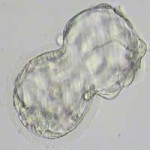
Time-lapse embryo imaging refers to constant recording of embryos developing in the stable environment of an incubator up to the point of embryo transfer.  The embryo is monitored and surveyed in IVF clinics constantly under a temperature – controlled environment without removing it from it.

The innovation of the method lies in time-lapse photography, where a camera is set in the incubator, where the embryos are placed to grow, to record a number of images at regular intervals. With this method IVF specialists can be given the information needed for selecting the best quality embryos in terms of morphology and cell dividing rate for increasing chances of successful implantation. And the key point of the method is that this is possible to happen all the way through the embryos’ development, without them leaving the incubator until they are implanted in contrast to conventional methods; allowing roughly 5,000 embryo images to be taken.

According to the researchers in Reproductive BioMedicine Online journal, from Care fertility group, preliminary data concerning the methods efficiency are quite encouraging. The researchers in this study used the information provided from time-lapse embryo imaging to classify the embryos as high, medium or low chance of aneuploidy (chromosomal abnormalities). Such DNA abnormalities can increase the risk of failed implantation reducing pregnancy chances.

Researchers reported that time-lapse embryo imaging may increase IVF success rates up to 56%. In further detail, they found that from a total of 88 embryos imaged and implanted there was no live birth from the high risk group compared to 5 (19% success rate) and 11 babies (61% success rate) born from the medium and low risk groups respectively.

Some scientists argue that the small number of couples participated in this study is not enough for making the method a routine clinical tool. However, the concept of it along with preliminary data provided definitely make it a strong candidate for replacing previous standard IVF methods for embryo selection, where embryos have to be removed from the incubator once a day to be checked under a microscope, which is likely to negatively affect their healthy development.

Would you ask for time-lapse imaging to increase your

pregnancy chances through IVF?


Hey! If you found this post interesting or useful, you can help us get even better by subscribing to our newsletter. Just write your email and you’ll have the latest news regarding fertility issues. Thank you once more for your help.

Embryo transfer media compounds boost IVF success rates

Current research suggests that specific compounds, called adherence compounds, when added into embryo transfer culture media boost IVF success rates.

Embryo transfer media compounds

Hyaluronic acid (HA), an adherence compound, can boost IVF success rates

Assisted reproductive technologies are generally considered to be successful medical procedures, but not successful enough. Couples diagnosed with infertility are commonly given an IVF (in vitro fertilisation) or ICSI (intracytoplasmisc injection) treatment. These treatments are the most successful forms of infertility treatments in IVF clinics and have similar success rates, however not successful enough given the increased demand for test-tube babies.

A great body of research is focused on studying how to boost IVF success rates while minimizing any adverse effects like multiple pregnancies. Part of this research has studied the effects of the addition of adherence compounds into the embryo transfer culture media.

Currently a scientific review analyzing 16 randomized studies on the above objective has reported that hyaluronic acid (HA), an adherence compound, can boost IVF success rates. Researchers compared embryo transfer media with different concentrations of the hyaluronic acid including high, low and no HA. As for the outcome most studies conducted their research by measuring live birth rates, pregnancy chances, implantation rates and multiple pregnancy rates. The women that took part in the studies aged 27.5-35.7 in average.

According to the review results hyaluronic acid increased IVF success rates in terms of live birth and pregnancy chances when added in the culture medium used for embryo transfer (450 vs 367). Fertility experts think that adherent compounds may actually increase the embryo potential for adhering to the uterus.

On the other hand, it was also found that the addition of the adherent compound increased chances of multiple pregnancies. Researchers argue that this result is probably linked to the number of embryos transferred by fertility doctors which quite often exceeds the 2 embryos. Thus, in such cases where more than one embryo is transferred into the womb, an adherent compound by promoting successful implantation could increase risk of a multiple pregnancy. Complementary studies investigating the outcome of using these enhanced transfer media for only single embryo transfer are necessary for optimizing these compounds’ contribution to a successful IVF outcome.

Would you risk a multiple pregnancy if it was to boost your pregnancy chances? We would be happy to receive your feedback.


Hey! If you found this post interesting or useful, you can help us get even better by subscribing to our newsletter. Just write your email and you’ll have the latest news regarding fertility issues. Thank you once more for your help.

10 IVF myths

IVF-myths

Many people think of IVF as the answer to all infertility problems

In Vitro Fertilisation (IVF) as an infertility treatment could not but be accompanied by its fair share of myths.The contribution of IVF and generally Assisted Reproductive Technology (ART) in the rapidly growing field of
medical technologies and healthcare services, available for disease treatment and life quality enhancement, is undoubtedly unique.

There are studies suggesting a higher implantation rate with frozen embryo transfer

However, many people think of IVF as the answer to all infertility problems. Others believe that IVF is a treatment of high cost, affordable only for a small number of people such as business people or movie stars.

Here is a list of most commonly believed IVF myths:

Myth #1: IVF always results in multiple pregnancies like twins or higher-order multiples

FALSE: The risk for a multiple pregnancy can be decreased by reducing the number of embryos transferred, especially in young women.

Myth #2: Patients undertaking an IVF cycle have no control over the outcome of the treatment

FALSE: The success rate of an IVF cycle is highly dependent on a thorough evaluation of the couple and a careful coordination of both a medical and a scientific approach for each couple. There are a number of things IVF specialists have to deal with in order to optimize the chances of a pregnancy such as ovarian stimulation monitoring and timing of oocyte retrieval.

Myth #3: IVF is the answer to all infertility problems

FALSE: Depending on the case of infertility for each patient there are more options for treatment like Intra Uterine Insemination (IUI) and ovulation induction (OI) with medications.

Myth #4: IVF is only for wealthy people

FALSE: Though the cost of IVF is not low, it is not less affordable than some major procedures like heart surgery or joint replacement.

Myth #5: IVF increases women’s fertility

FALSE: Technically, IVF does the opposite. The hormones that are taken at the beginning of a cycle are made to stop a woman’s natural fertility process. Then the next round of hormones creates a synthetic cycle for optimizing the chances of pregnancy.

Myth #6: IVF babies have a significantly high risk of birth defects and malformations

FALSE: Even though some evidence seem to indicate that there may be some increased risk for birth defects in babies born through IVF, current studies suggest that the difference in the incidence of birth defects between naturally conceived  and IVF babies is not high significant.

Myth #7: IVF requires admission in the hospital

FALSE: It does not require overnight admission.  It is an out-patient treatment.

Myth #8: IVF is the last resort for infertile couples

FALSE: IVF is only one of the options available for infertility treatment, but in cases where IVF is not applicable there are other types of Assisted Reproductive Technology that work for patients like egg donor, sperm donor or surrogate.

Myth #9: Insurance covers IVF costs

FALSE: Usually there is no fertility insurance coverage but it is advisable to check with the insurance company before starting an IVF treatment.

Myth #10: IVF is successful in all cases

FALSE: Unfortunately this is not true; IVF is successful in up to 40% of cases. Multiple factors contribute to IVF success rates including the age of the woman.

Any more IVF myths to add?


Hey! If you found this post interesting or useful, you can help us get even better by subscribing to our newsletter. Just write your email and you’ll have the latest news regarding fertility issues. Thank you once more for your help.